RLG runs e-waste collection, material trading and compliance reporting under India's E-Waste Management Rules, coordinating collection partners, recyclers, logistics firms and its own finance and compliance teams.
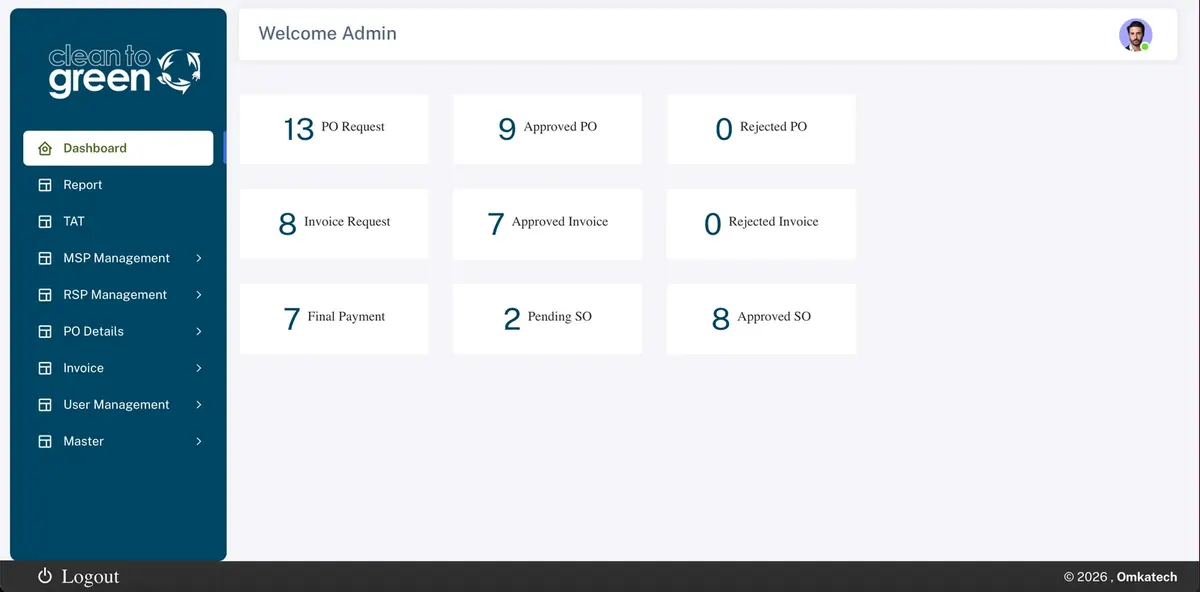
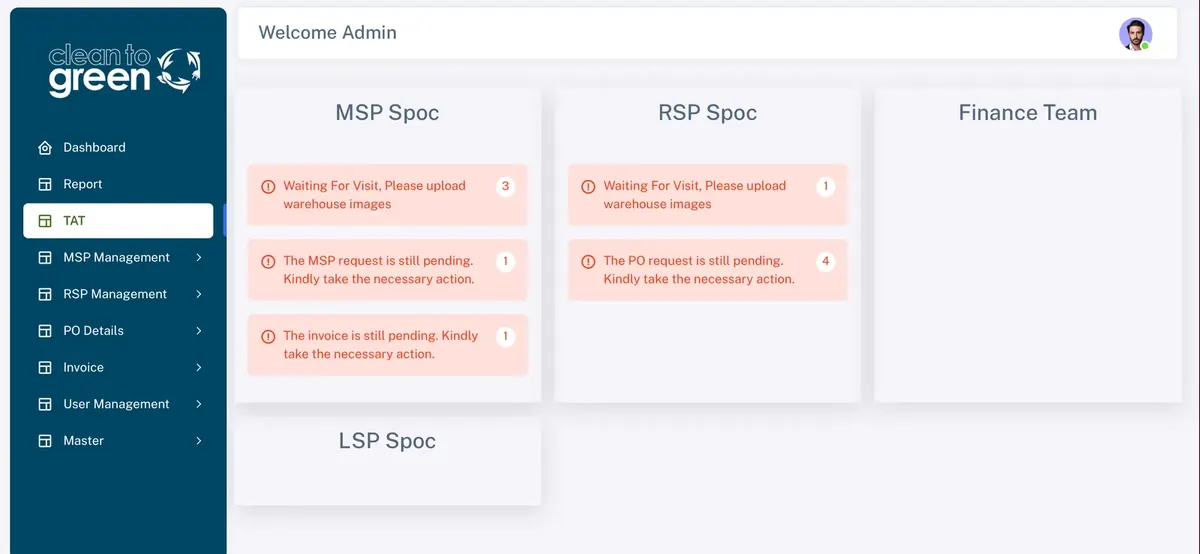
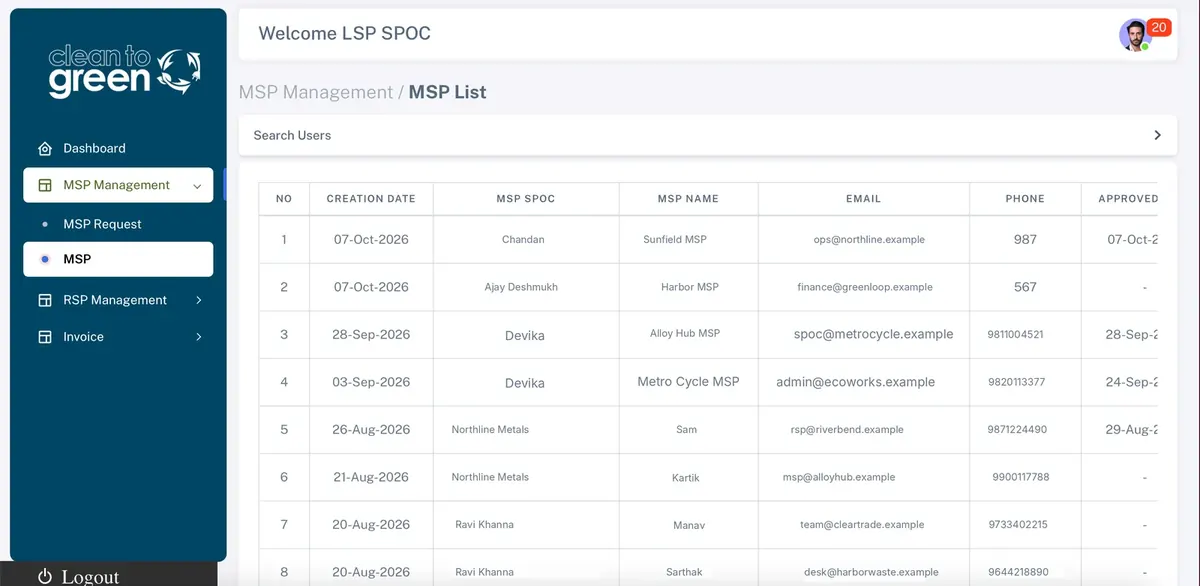
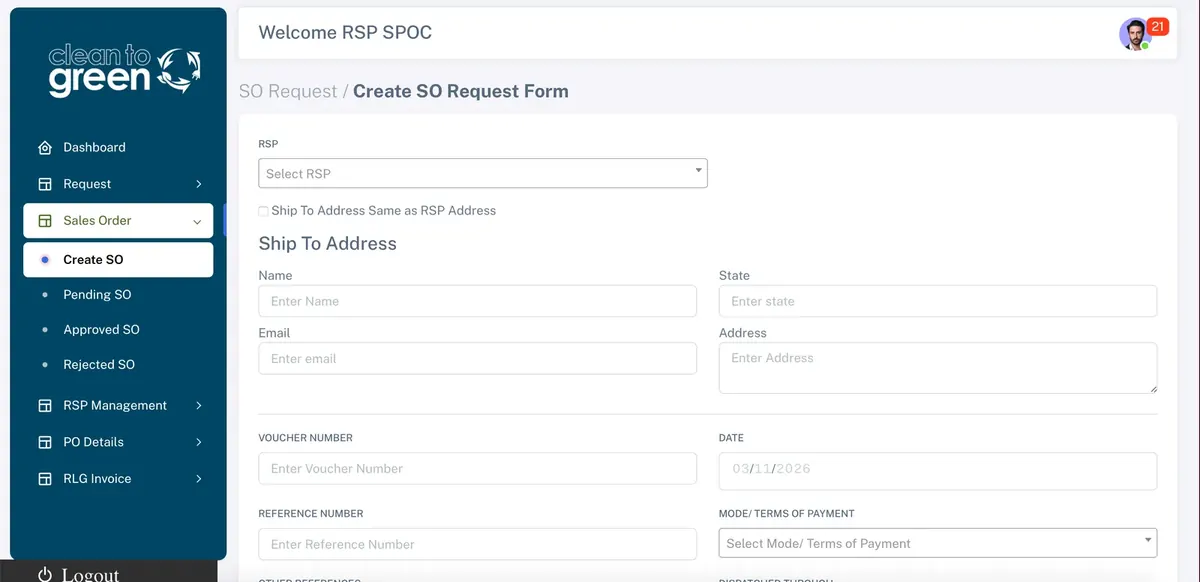
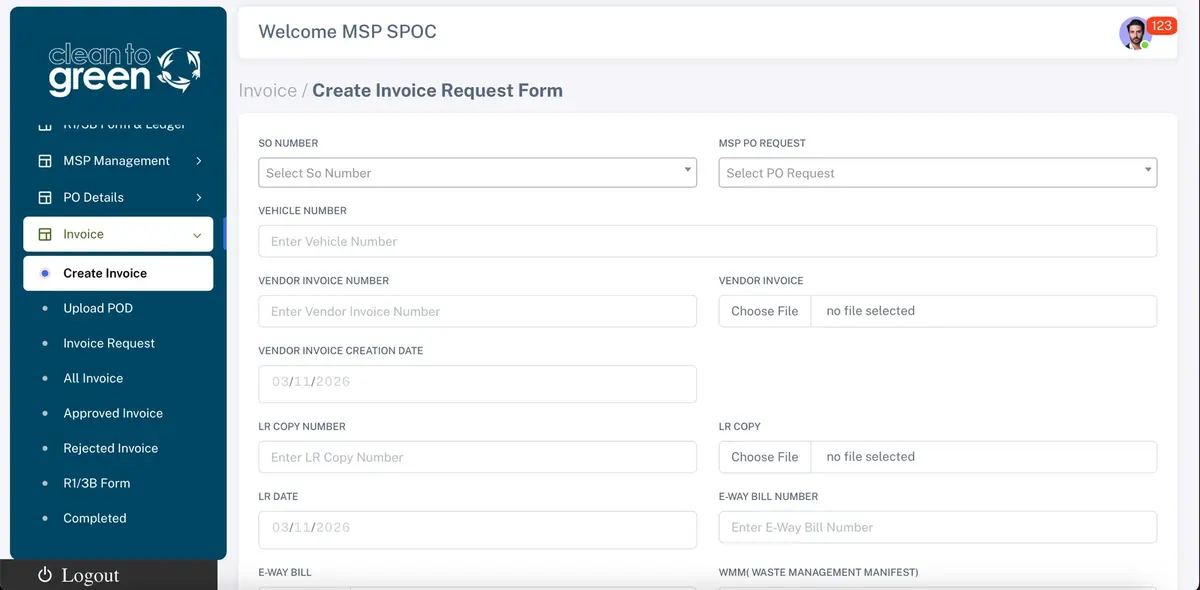
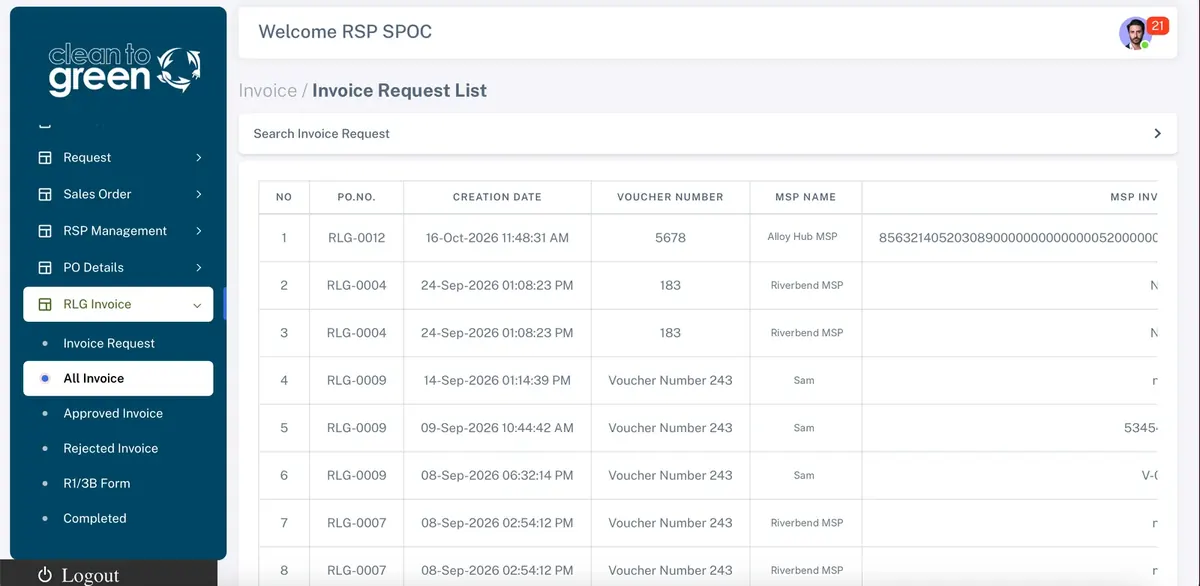
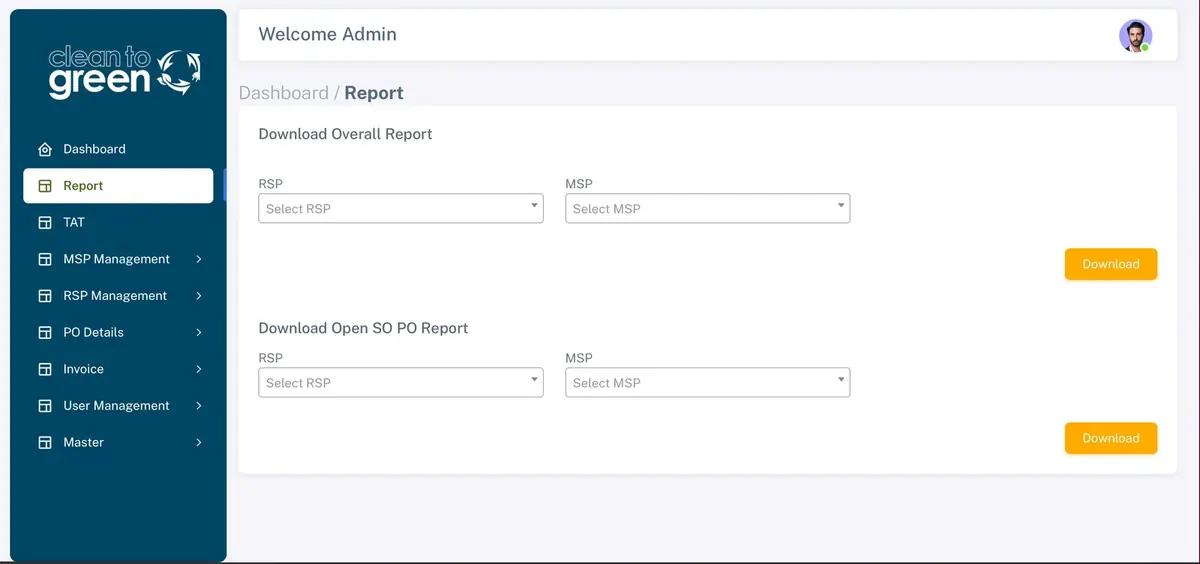
We replaced their spreadsheets, paper onboarding and email approvals with two connected systems: C2G, the collection platform, and a trading portal that runs every sales order, purchase order, invoice and payment.
Book a similar engagement →The OMKA team is well versed and truly professional. We have been working with them for the past five years, and they are wonderful.
Consumers and companies had no way to book an e-waste pickup online. Assigning logistics, routing to collection centres and handing over to finance all happened by phone and spreadsheet.
Sales orders, purchase orders and invoices lived in separate files. Partner onboarding was paper-based, with no capacity tracking or compliance checks.
Decisions that should pass through several managers happened in inboxes. Reconciliation, debit and credit notes and GST checks were entirely manual, with no record of who approved what.
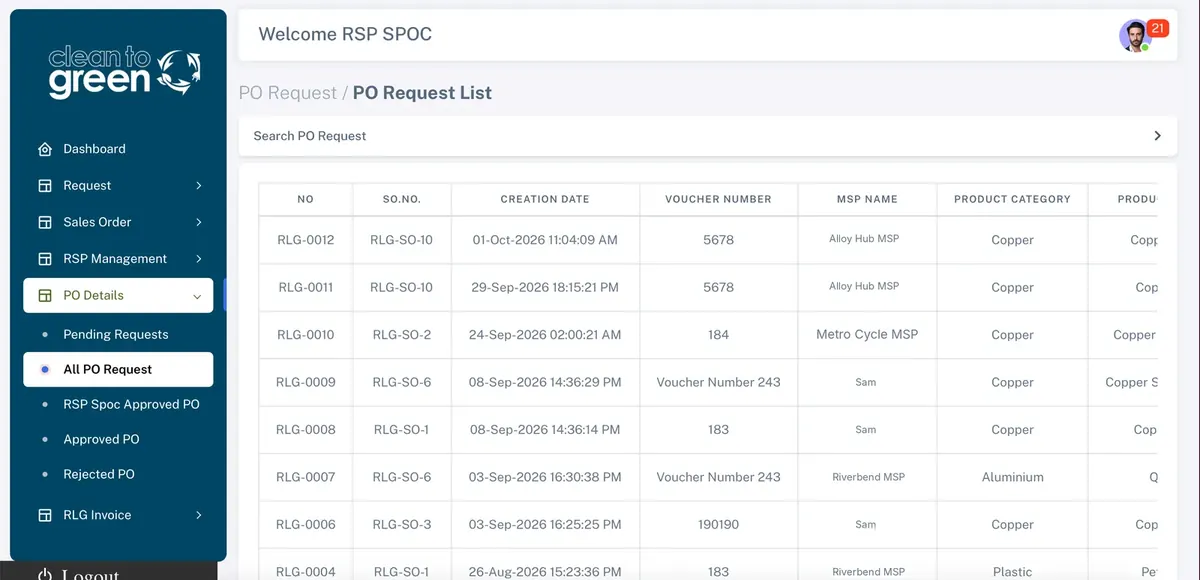
Before any screen, we mapped how RLG actually trades: a recycler's purchase order becomes RLG's sales order, which becomes purchase orders to one or more collection partners, then invoices on both sides and payments in tranches. The portal is built around that chain, not around a generic template.
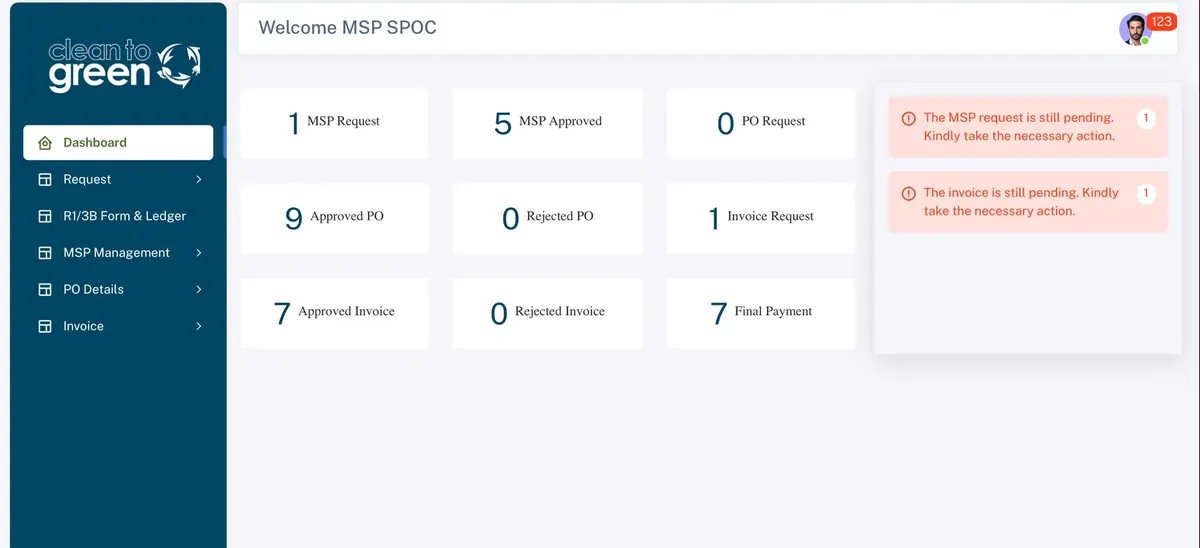
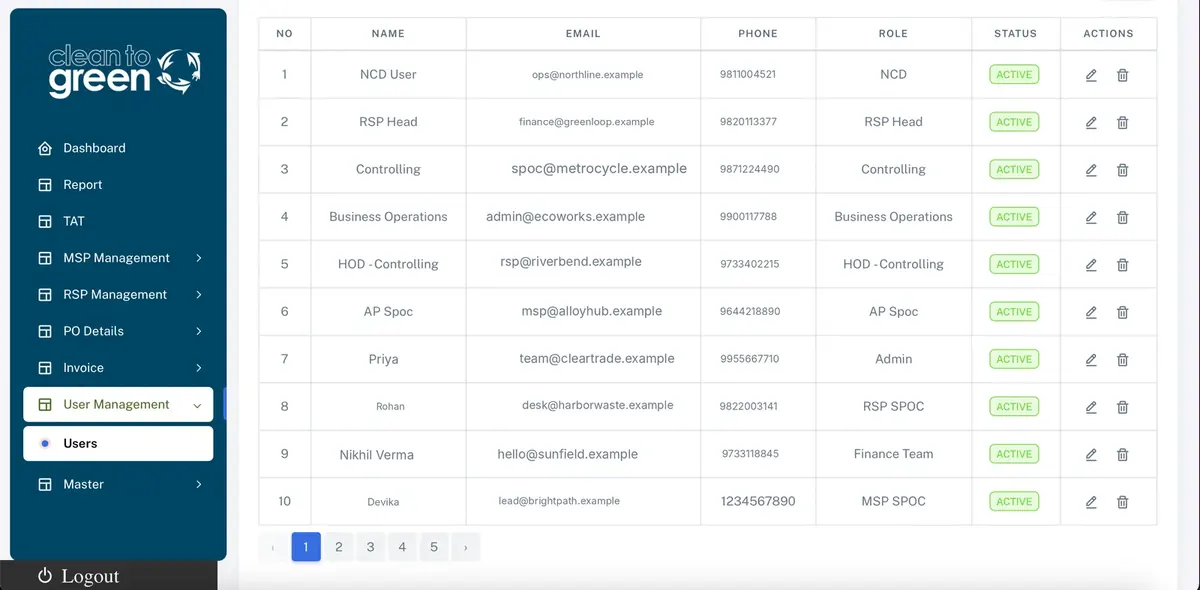
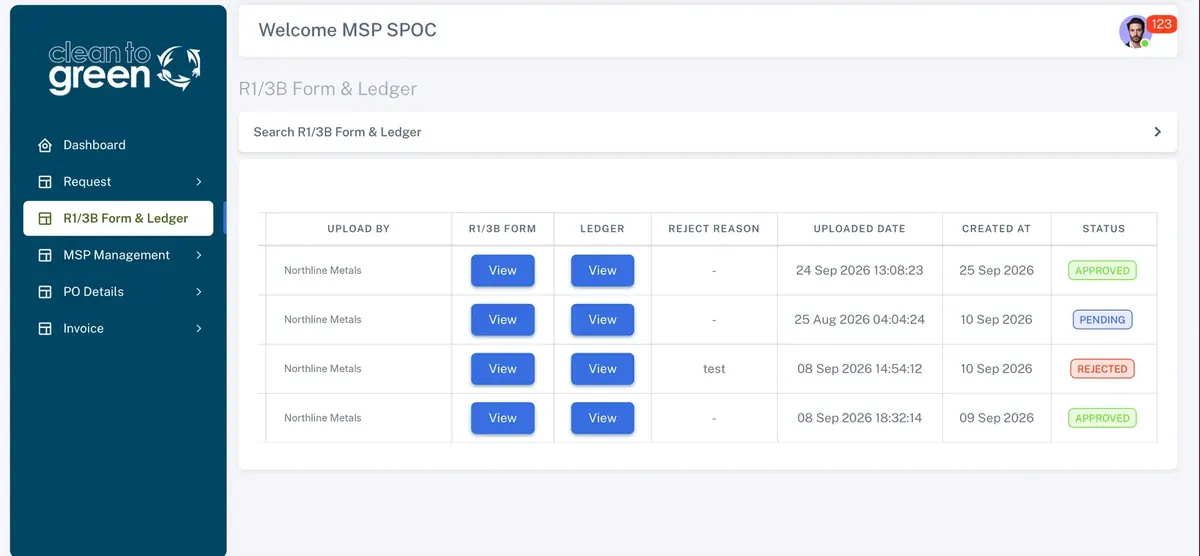
Every role sees only its own work. Partner onboarding runs through a three-stage KYC check, each document is approved in sequence, and every approval is logged. Where RLG's NAV accounting system had to stay in charge, we built a controlled Excel bridge instead of a fragile live sync.
The flow the trading portal runs for every deal between a recycler, RLG and its collection partners.
Off-the-shelf tools assume one buyer and one seller. RLG sits between recyclers and many collection partners, with its own sales order in the middle. Modelling that chain exactly is what let teams stop keeping parallel spreadsheets.
The approval chain changed as RLG grew, with new roles such as RSP head, controlling and business operations added to sales orders. Because approval levels are configured per document type, adding a level is a change, not a rebuild.
RLG's accounting stays in Microsoft NAV. Rather than risk a brittle real-time integration, orders, invoices and sales invoices move through structured Excel exports and imports that finance controls.
Collection partners and their SPOCs work on mobile, while finance, compliance and admin work on the web. Each person has one login and sees the same record wherever they open it.