Mobile applications have become an essential part of how businesses connect with customers, deliver services, and generate revenue. From online shopping and digital banking to healthcare, education, and entertainment, mobile apps are transforming everyday experiences across the United States.
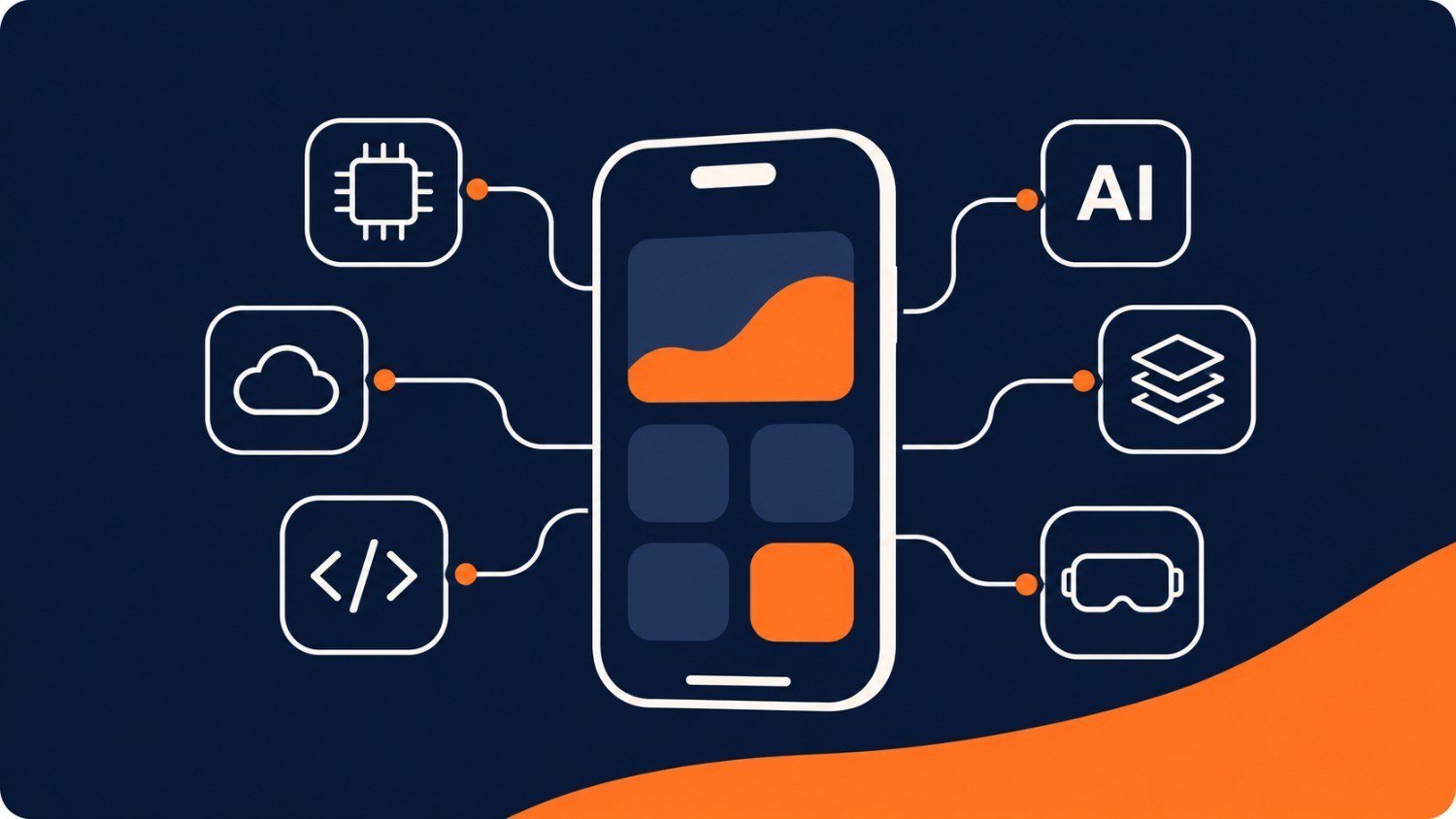
In 2027, mobile app development will move beyond traditional application features. Artificial intelligence (AI), automation, cloud computing, advanced cybersecurity, and immersive technologies will influence how businesses build and manage mobile applications.
For startups, small businesses, and established enterprises in the USA, understanding these developments can help create competitive digital products. Businesses planning to launch a new application can explore Mobile app development services to discover how custom iOS and Android apps can support their business goals.
1. Artificial Intelligence and Machine Learning Integration
Artificial intelligence will remain one of the most influential technologies in mobile app development. Businesses can use AI and machine learning to understand customer behavior, automate repetitive tasks, and deliver personalized recommendations.
For example, retail applications can suggest products based on browsing history, while banking apps can identify unusual transactions and provide intelligent financial insights. Healthcare applications can use AI-powered tools to support appointment management and general health information services.
In 2027, businesses will increasingly explore AI-powered chatbots, voice assistants, predictive analytics, and intelligent search features. Companies can also consider AI and Automation Solutions to introduce intelligent workflows and improve business operations.
2. Generative AI and AI-Powered Mobile Experiences
Generative AI is changing how users interact with digital products. Instead of relying only on predefined menus and search functions, applications can offer conversational experiences that help users complete tasks.
For example, an eCommerce app could help customers discover products through natural-language questions. A travel application could suggest personalized itineraries, while a productivity app could summarize information and create task lists.
Businesses should focus on practical AI features that solve customer problems rather than adding AI simply because it is popular. Data privacy, accuracy, transparency, and human oversight will remain important when introducing generative AI into mobile applications.
3. 5G Technology and Faster Mobile Applications
The expansion of 5G connectivity is creating opportunities for faster and more responsive mobile experiences. With improved network speeds and lower latency in supported environments, applications can handle demanding activities more efficiently.
Industries such as gaming, healthcare, logistics, and entertainment can benefit from these capabilities. For example, businesses can explore high-quality video communication, connected-device experiences, real-time tracking, and cloud-based gaming.
However, app developers should not assume that every customer has access to consistent 5G coverage. Applications must continue to work reliably on different network conditions, including Wi-Fi and 4G connections.
4. Cross-Platform App Development
Developing separate applications for iOS and Android can increase project costs, development time, and maintenance requirements. Cross-platform frameworks such as Flutter and React Native allow businesses to build applications for multiple platforms using shared code.
This approach can help startups and small businesses in the United States launch products more efficiently. It can also simplify updates and maintain a more consistent user experience.
Nevertheless, cross-platform development is not suitable for every project. Applications that depend heavily on advanced hardware capabilities, complex animations, or platform-specific features may require native development. The right approach depends on business requirements, budget, performance expectations, and long-term goals.
5. Stronger Mobile App Security and Privacy
Cybersecurity will be a major priority for mobile applications in 2027. Apps frequently handle sensitive information, including personal details, payment data, business records, and account credentials. A security weakness can damage customer trust and expose businesses to financial and legal risks.
Developers should consider biometric authentication, multi-factor authentication, secure APIs, data encryption, regular vulnerability testing, and secure cloud infrastructure.
Privacy should also be considered from the beginning of the development process. Businesses serving US customers need to evaluate applicable federal and state privacy requirements, depending on the information they collect and the services they provide.
As AI becomes more integrated into applications, companies must also protect AI systems, user data, and automated processes from misuse.
6. Augmented Reality and Immersive Experiences
Augmented reality (AR) allows users to experience digital content within their physical surroundings. It can make mobile applications more interactive and useful, especially in industries where customers benefit from visual demonstrations.
For example, furniture retailers can let shoppers preview how a sofa might look in their living room. Beauty brands can offer virtual product try-ons, while real estate businesses can explore interactive property presentations.
In 2027, businesses should consider AR when it improves product discovery, customer confidence, or decision-making. A useful immersive feature can create more value than an expensive feature that customers rarely use.
7. Cloud-Based Mobile App Development
Cloud technology makes it easier for mobile applications to access scalable storage, computing resources, and backend services. Businesses can use cloud platforms to manage customer accounts, synchronize information, process data, and support growing user demand.
Cloud-based architecture can also help development teams release updates and maintain applications without depending entirely on individual devices.
For businesses expecting growth, cloud infrastructure offers flexibility. Working with experienced Cloud and DevOps Services can help companies plan infrastructure, automate deployment, monitor performance, and improve application reliability.
8. Internet of Things (IoT) Integration
The Internet of Things connects physical devices to digital systems, allowing them to exchange information. Mobile applications can act as control centers for smart devices, connected equipment, and business operations.
In the United States, IoT-enabled mobile solutions have applications across smart homes, healthcare, manufacturing, transportation, and logistics.
For instance, a smart home app can control lighting and temperature, while a logistics application can monitor vehicle locations and delivery conditions. Businesses should prioritize reliable device connectivity, secure communication, and clear user controls when developing IoT-enabled apps.
9. Low-Code and AI-Assisted App Development
Low-code platforms and AI-assisted development tools are helping teams create prototypes and certain business applications more quickly. They can reduce repetitive coding work and make it easier to test ideas before investing in a full-scale product.
Small businesses can use these tools to explore internal dashboards, workflow applications, and basic customer-facing solutions.
However, faster development does not remove the need for professional architecture, testing, security reviews, and maintenance. Complex applications still require experienced developers to ensure scalability, reliability, and quality.
10. Personalized User Experience and Accessibility
Personalization will continue to influence mobile app success. Customers want applications that understand their preferences, provide relevant content, and make important actions easy to complete.
Businesses can use analytics and consent-based personalization to improve navigation, recommendations, notifications, and customer journeys.
Accessibility is equally important. Developers should consider screen-reader compatibility, readable text, sufficient color contrast, captions, keyboard navigation where relevant, and simple interfaces. Designing for different abilities and devices can make applications more inclusive and easier to use.
Mobile App Industry Insights
Here are some figures highlighting the business opportunities behind mobile technology.
| Figure | What it measures |
|---|---|
| $167 billion | Global consumer spending on mobile app in-app purchases in 2025, according to Sensor Tower. |
| Nearly $60 billion | Consumer spending in the United States mobile app market in 2025, according to Sensor Tower. |
| 21% growth | Year-over-year increase in global non-gaming app in-app purchase revenue in 2025. |
| $4.8 billion | Gartner’s forecast for the global market for securing AI in 2027. |
| 68.7% growth | Gartner’s projected year-over-year increase in the AI security market from 2026 to 2027. |
Note: These figures refer to different market categories and measurement periods. They are industry indicators, not guaranteed results for individual businesses.
How Businesses Can Prepare for Mobile App Development in 2027
Businesses should begin by identifying customer needs and defining clear application goals. Before selecting technologies, consider the problems the app should solve, the audience it will serve, and the features that will provide measurable value.
Next, choose a suitable development approach, plan for security and accessibility, and create a realistic budget for development and ongoing maintenance. Testing with real users can help identify usability issues before launch.
Businesses should also understand the financial investment involved. Read our guide to Mobile App Development Cost in 2026 to learn about common app categories, project requirements, and cost considerations.
Most importantly, treat app development as a continuous process. Regular updates, performance monitoring, customer feedback, and security improvements help keep an application useful as technology and user expectations evolve.
Conclusion
Mobile app development in 2027 will be shaped by AI, generative AI, 5G, cross-platform frameworks, cloud computing, IoT, AR, and stronger cybersecurity. These technologies offer businesses new ways to improve customer experiences, streamline operations, and build digital services.
For companies in the United States, the best strategy is not to adopt every emerging technology. It is to select the solutions that align with business objectives, customer expectations, security requirements, and available resources.
Frequently asked questions
What are the biggest mobile app development trends in 2027?
The leading trends include artificial intelligence, generative AI, 5G connectivity, cross-platform development, cloud computing, IoT integration, augmented reality, and advanced mobile security.
How will AI impact mobile app development in 2027?
AI will help businesses deliver personalized recommendations, intelligent chatbots, predictive insights, automated workflows, and conversational user experiences.
Which mobile app development framework is best for businesses?
Flutter and React Native are popular cross-platform options. Native iOS and Android development may be more suitable when a project requires advanced platform-specific functionality or performance.
Is mobile app development a good investment for small businesses?
Yes, when an application addresses a genuine customer need or improves business operations. Companies should evaluate development costs, maintenance, user demand, and expected business outcomes before investing.
Why is mobile app security important in 2027?
Mobile applications may process personal, financial, and business information. Strong authentication, encryption, secure APIs, and regular security testing help protect users and business data.
How much does it cost to develop a mobile app in the USA?
The cost varies based on application complexity, features, design, integrations, technology, and development team. A basic app may cost significantly less than a complex enterprise platform, so businesses should request a project-specific estimate.
What is the difference between native and cross-platform app development?
Native development creates separate applications for platforms such as iOS and Android. Cross-platform development uses shared code to support multiple platforms, potentially reducing development and maintenance effort.
How can businesses make their mobile apps successful?
Businesses should focus on user-friendly design, reliable performance, useful features, strong security, accessibility, customer feedback, and continuous improvements after launch.